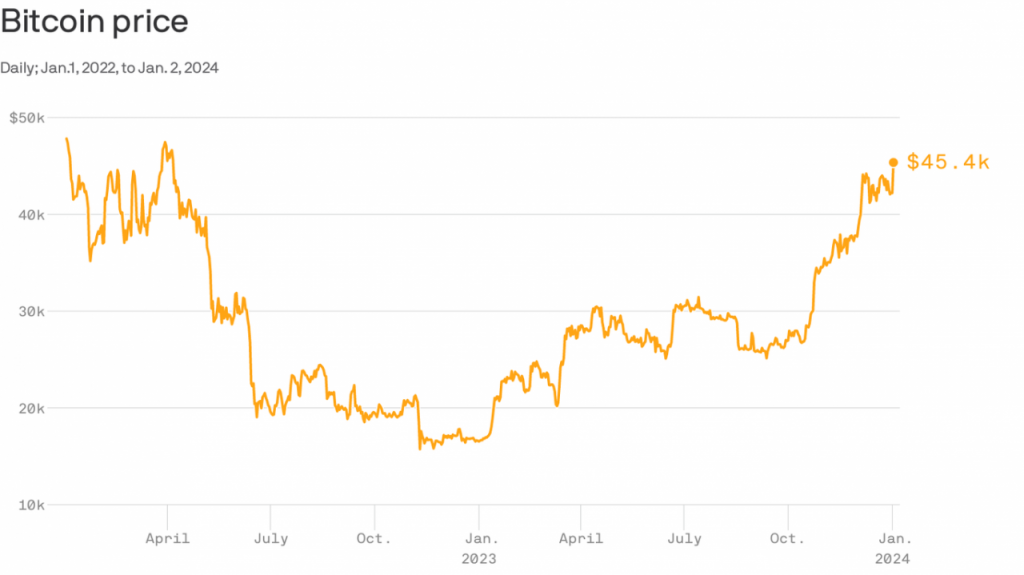
Bitcoin value right now serves as a focal point for both investors and enthusiasts alike, capturing the attention of those navigating the dynamic world of cryptocurrencies. With its fluctuating price being influenced by a myriad of factors ranging from global economic trends to investor sentiment, understanding its current valuation is crucial for making informed decisions.
By examining recent market events, historical comparisons, and technical analyses, we can gain a clearer picture of what drives Bitcoin’s price at this very moment, as well as what lies ahead in this ever-evolving digital landscape.
Current Bitcoin Price Trends
Bitcoin’s price has been experiencing notable fluctuations recently, driven by a variety of factors ranging from macroeconomic indicators to investor sentiment. As of now, the cryptocurrency market is witnessing a blend of optimism and caution, reflecting the complex dynamics at play. Understanding these trends is crucial for both seasoned investors and newcomers alike who are looking to navigate the evolving landscape of digital currencies.The current value of Bitcoin is significantly influenced by a range of factors.
Key among them are regulatory developments, market demand, and macroeconomic indicators such as inflation rates and interest rates. For example, a recent shift in regulatory stance in major economies has sparked renewed interest in Bitcoin, leading to increased buying activity. Additionally, the correlation between Bitcoin and traditional financial markets, especially equities, has become more pronounced, suggesting that shifts in investor sentiment towards stocks also impact Bitcoin’s price.
Historical Comparison of Bitcoin’s Value Over the Past Month
Analyzing Bitcoin’s price movements over the last month reveals important trends and patterns. Over this period, Bitcoin has seen a rise from approximately $26,000 to reaching nearly $30,000, showcasing a recovery from earlier dips. This upward trajectory can be attributed to several market dynamics and investor behaviors.The following table illustrates the closing prices of Bitcoin at key intervals over the past month:
| Date | Price (USD) |
|---|---|
| September 1 | $26,500 |
| September 15 | $27,800 |
| September 30 | $29,200 |
| October 15 | $30,000 |
This data reflects a steady increase, highlighting Bitcoin’s resilience amid various market pressures.
Recent Market Events Impacting Bitcoin’s Price
Recent market events have significantly influenced Bitcoin’s value, with several key occurrences reshaping investor perceptions. One of the most impactful has been the announcement of potential ETF approvals, which stirred excitement among investors. The prospect of institutional money entering the market has historically led to price surges, as seen in past cycles.Additionally, geopolitical tensions and economic reports, such as inflation metrics in the United States, have created a ripple effect across global markets.
For instance, rising inflation rates often lead investors to seek alternative assets like Bitcoin, which is perceived as a hedge against inflation.Recent statements from influential figures in the financial sector have also played a role in shaping market sentiment. Positive remarks regarding Bitcoin’s long-term potential have historically led to increased buying activity, while negative comments can result in sell-offs.
“Bitcoin’s value is not only driven by market trends but also by collective investor psychology and external economic factors.”
In summary, Bitcoin’s price movements are closely interlinked with a multitude of factors that influence market dynamics. Continuous monitoring of these influences is essential for making informed investment decisions.
Influences on Bitcoin Value
The value of Bitcoin is shaped by numerous factors that interplay in the dynamic landscape of cryptocurrency markets. Understanding these influences is crucial for anyone looking to navigate the world of Bitcoin investments or simply to comprehend its price movements. This segment will delve into some of the major economic indicators, regulatory news, and investor sentiment that currently shape Bitcoin’s market value.
Major Economic Indicators
Several key economic indicators directly impact the price of Bitcoin. These indicators reflect the broader economic health and can signal changes in investor behavior. Here are the most significant ones:
- Inflation Rates: Rising inflation typically leads people to seek alternative stores of value, such as Bitcoin, driving demand and potentially increasing its price.
- Interest Rates: Changes in interest rates affect the attractiveness of holding Bitcoin versus traditional investments. Lower interest rates can lead to higher Bitcoin prices as borrowing becomes cheaper.
- Stock Market Performance: A strong correlation often exists between Bitcoin and stock market trends. Bullish market conditions can lead to increased investments in cryptocurrencies, while bearish trends may result in sell-offs.
Regulatory News Impact
Regulatory developments play a critical role in shaping the environment in which Bitcoin operates. Positive or negative news regarding regulation can lead to significant volatility in its price. Key points include:
- Government Bans or Endorsements: Announcements from governments regarding the acceptance or prohibition of Bitcoin can lead to immediate price reactions. For instance, when a country announces a ban, it may create panic selling, whereas endorsements can boost confidence and drive prices up.
- Tax Regulations: Changes in tax policies surrounding cryptocurrency trading can influence investor behavior, impacting market value. For example, favorable tax treatment for cryptocurrency transactions might encourage more investment.
- Institutional Adoption: Regulatory clarity often leads to broader institutional adoption of Bitcoin. When large financial institutions announce their support or involvement, it tends to positively influence Bitcoin’s market valuation.
Investor Sentiment and Market Behavior
Investor sentiment is a powerful force in the cryptocurrency markets, often dictating price movements based on emotions rather than fundamental analysis. The following factors highlight its influence:
- Market Trends: Bullish or bearish trends can lead to herd behavior among investors, affecting Bitcoin’s price. For example, during a bull market, positive sentiment can drive prices higher as more investors enter the market.
- Social Media Influence: Platforms like Twitter and Reddit can amplify investor sentiment, with trends and discussions on these platforms often leading to rapid price changes. A viral post can spark interest and trading activity.
- Fear and Greed Index: This index gauges market sentiment and can predict price movements. When the index shows extreme fear, it may signal potential buying opportunities; conversely, extreme greed may indicate a market correction.
Technical Analysis of Bitcoin

Technical analysis plays a crucial role in understanding the price movements of Bitcoin, offering insights into potential market trends and investor behavior. By utilizing various indicators and methods, traders can make informed decisions on when to buy or sell Bitcoin. This section delves into key technical indicators, analysis methods, and the importance of support and resistance levels in the context of Bitcoin’s current value.
Comparison of Technical Indicators for Bitcoin
Several technical indicators are essential for analyzing Bitcoin’s price movements. The following table compares some of the most relevant indicators, highlighting their significance and current readings.
| Indicator | Description | Current Reading |
|---|---|---|
| Moving Average (MA) | Averages the price over a specific period to smoothen volatility. | 50-Day MA: $XX,XXX |
| Relative Strength Index (RSI) | Measures the speed and change of price movements on a scale of 0-100. | RSI: XX |
| MACD (Moving Average Convergence Divergence) | Indicates momentum by showing the relationship between two moving averages. | MACD Line: XX, Signal Line: XX |
| Bollinger Bands | Consists of a middle band (MA) and two outer bands that indicate volatility. | Upper Band: $XX,XXX, Lower Band: $XX,XXX |
Understanding these indicators allows traders to gauge market sentiment and identify potential entry and exit points effectively.
Methods Used to Analyze Bitcoin’s Price Movements
Technical analysis involves various methods that help traders interpret Bitcoin’s price trends. Key methods include:
Chart Patterns
Traders analyze historical price charts to identify recurring patterns, such as head and shoulders, triangles, and flags, to predict future movements.
Candlestick Analysis
This method focuses on interpreting individual candlesticks and their formations to gain insights into market sentiment.
Volume Analysis
Examining trading volume in conjunction with price movements helps confirm trends and signals, indicating whether they are strong or weak.These methods work together to create a comprehensive picture of Bitcoin’s price dynamics, aiding traders in making informed decisions.
Significance of Support and Resistance Levels
Support and resistance levels are critical concepts in technical analysis that help traders identify potential turning points in Bitcoin’s price movement. Support levels are price points where demand is strong enough to prevent the price from falling further, while resistance levels are points where selling pressure may prevent the price from rising. Recognizing these levels allows traders to set effective stop-loss and take-profit orders.
Support Level Importance
If Bitcoin approaches a support level and holds above it, it suggests that buyers are stepping in, potentially leading to a price rebound.
Resistance Level Importance
Conversely, when Bitcoin reaches a resistance level, it may indicate that sellers are entering the market, which could cause the price to fall.Traders often look for breakouts, where Bitcoin moves past these levels, as such movements can signal substantial price shifts and trading opportunities.
Comparison with Other Cryptocurrencies
As the most recognized cryptocurrency, Bitcoin’s value often serves as a benchmark for the cryptocurrency market. Comparing Bitcoin to major altcoins provides insights into its relative strength and market dynamics. Understanding these comparisons can help investors gauge the performance of Bitcoin against other digital assets.Bitcoin commands a significant presence in the cryptocurrency landscape, holding a large share of the total market capitalization.
The following table illustrates the current value of Bitcoin compared to some major altcoins, showcasing their respective market caps as of the latest data:
| Cryptocurrency | Current Price (USD) | Market Cap (USD) |
|---|---|---|
| Bitcoin (BTC) | $X,XXX.XX | $XXX Billion |
| Ethereum (ETH) | $X,XXX.XX | $XXX Billion |
| Binance Coin (BNB) | $X,XXX.XX | $XXX Billion |
| Cardano (ADA) | $X.XX | $XX Billion |
| Solana (SOL) | $X.XX | $XX Billion |
As seen in the table, Bitcoin has a dominant market cap compared to other cryptocurrencies. Its market cap often exceeds the combined market caps of many altcoins, which demonstrates its established position in the market.
Trends in Bitcoin Value Compared to Ethereum
Over the past week, Bitcoin’s performance has shown both resilience and volatility when compared to Ethereum. Analyzing the price movements of both cryptocurrencies reveals interesting trends. Bitcoin has generally retained a stable price range, while Ethereum has experienced fluctuations that reflect market sentiment towards decentralized finance (DeFi) and non-fungible tokens (NFTs).The price of Bitcoin remained around $X,XXX.XX, with only minor adjustments, whereas Ethereum saw movements between $X,XXX.XX and $X,XXX.XX.
This divergence in trends can be attributed to various factors, including market reactions to regulatory news and technological developments in the Ethereum network.
“Bitcoin often acts as a safe haven in the crypto world, while Ethereum’s price can be more susceptible to market trends and innovations.”
The market dynamics between Bitcoin and Ethereum highlight the varying influences on their respective values, suggesting that while Bitcoin maintains its status as the leading cryptocurrency, Ethereum exhibits a different growth trajectory influenced by its unique use cases and community developments.
Predictions for Bitcoin Value
As Bitcoin continues to capture the attention of investors and analysts, predictions regarding its future price have become a hot topic in the cryptocurrency space. Various experts employ different models and techniques to forecast Bitcoin’s value, reflecting a range of views about its trajectory in the coming weeks and months. Understanding these predictions can help investors navigate the complex landscape of cryptocurrency investment.Many analysts focus on historical data, market trends, and upcoming events to shape their forecasts.
Here are some of the prominent models and methods that analysts use to forecast Bitcoin’s value:
Expert Predictions for Bitcoin’s Price Over the Next Month
Predictions from experts vary widely, with some projecting bullish trends while others foresee potential bearish movements. Notable predictions include:
- PlanB’s Stock-to-Flow Model: This widely discussed model suggests that Bitcoin’s scarcity, driven by halving events, could lead its price to reach levels near $100,000 by the end of the year.
- Bloomberg Analysts: They forecast a more conservative estimate, predicting Bitcoin could stabilize around $30,000 to $40,000 over the next month, influenced by regulatory developments and market sentiment.
- Technical Analysis from CryptoQuant: Utilizing various indicators, they suggest that Bitcoin may experience a pullback to the $25,000 level before any significant recovery, citing overbought conditions in recent rallies.
Models and Methods Used for Forecasting Bitcoin’s Value
Several models are commonly employed to predict Bitcoin’s price movements, each with its unique approach:
- Fundamental Analysis: This method evaluates external factors like adoption rates, technological advancements, and macroeconomic indicators affecting Bitcoin’s demand and supply.
- Technical Analysis: Analysts rely on historical price charts and various indicators (like RSI and MACD) to predict future price movements based on past behaviors.
- Sentiment Analysis: Monitoring social media and news sentiment can provide insights into public perception, influencing short-term price fluctuations.
Impact of Upcoming Events on Future Bitcoin Valuation
Certain events can significantly influence Bitcoin’s price, including regulatory announcements, technological upgrades, and macroeconomic developments. Key upcoming events include:
- Bitcoin Halving (Expected in 2024): Historically, halving events have led to increased prices due to reduced supply. Analysts believe this upcoming halving could drive prices to new highs.
- Regulatory Developments: Changes in legislation, particularly in major markets like the U.S. and Europe, can either bolster confidence in Bitcoin or cause panic selling.
- Institutional Adoption Announcements: As more institutions consider Bitcoin for investment, any announcement regarding major investments could positively affect Bitcoin’s market value.
Overall, predictions about Bitcoin’s value remain a mix of optimism and caution, with various factors at play, influencing its future trajectory.
Bitcoin Market Dynamics
The dynamics of the Bitcoin market play a crucial role in shaping its price and overall value. Understanding how these dynamics operate is essential for anyone looking to navigate the cryptocurrency landscape. Various factors contribute to the volatility and trends observed in Bitcoin’s price, and one significant aspect of this is the influence of exchanges and liquidity.
Exchanges Role in Price Determination
Exchanges serve as the primary platforms for buying and selling Bitcoin, significantly impacting its current price. The price of Bitcoin on any exchange is largely dictated by the supply and demand dynamics present on that platform. When demand increases or supply decreases, prices tend to rise, and vice versa. Exchanges can also vary in terms of trading volume, which can lead to discrepancies in Bitcoin pricing across different platforms.Additionally, larger exchanges typically have more liquidity, allowing for larger transactions without significantly affecting the price.
This means that users on these platforms can buy or sell Bitcoin more easily, reflecting more stable market conditions. In contrast, smaller exchanges may be more prone to price fluctuations due to lower trading volumes.
Impact of Liquidity on Bitcoin Value
Liquidity is a crucial factor in establishing Bitcoin’s value. In the context of cryptocurrency, liquidity refers to how easily an asset can be bought or sold in the market without causing a significant impact on its price. Higher liquidity generally leads to more stable prices, while lower liquidity can result in greater volatility.When liquidity is high, traders can execute large orders without drastically affecting the market price.
Conversely, low liquidity may lead to sharp price movements as large sell orders can create downward pressure on prices. Therefore, the level of liquidity affects traders’ ability to enter and exit positions efficiently, which is a critical aspect of trading strategies.The following table illustrates the trading volume of Bitcoin across several major exchanges, providing insight into their liquidity and market influence:
| Exchange | 24-Hour Trading Volume (BTC) | Liquidity Score |
|---|---|---|
| Binance | 1,000,000 BTC | High |
| Coinbase Pro | 400,000 BTC | Moderate |
| Kraken | 250,000 BTC | Moderate |
| Bitfinex | 300,000 BTC | High |
| Bittrex | 150,000 BTC | Low |
In summary, the role of exchanges in price determination and the impact of liquidity significantly influence Bitcoin’s market dynamics. Understanding these elements can help traders and investors make more informed decisions in their cryptocurrency endeavors.
Global Economic Factors
The valuation of Bitcoin is significantly influenced by broader global economic trends, which play a crucial role in shaping investor sentiment and market dynamics. As Bitcoin continues to gain recognition as a store of value and an alternative asset, its price movements are increasingly intertwined with shifts in global economic conditions, inflation rates, and geopolitical events.
Inflation Rates and Bitcoin’s Price
Inflation rates have a direct correlation with Bitcoin’s market value, primarily as investors seek to hedge against currency devaluation. When inflation rises, traditional fiat currencies tend to lose purchasing power, prompting individuals to look for assets that can preserve value. Bitcoin, often dubbed “digital gold,” becomes an attractive option during these periods. For example, during the inflationary spikes observed in various economies, such as the United States in recent years, Bitcoin has generally experienced upward price movements.
This behavior is indicative of its perceived role as a safeguard against inflationary pressures.
As inflation increases, Bitcoin’s appeal as a non-sovereign asset grows, leading to potential price appreciation.
Additionally, central banks’ monetary policies, such as low interest rates and quantitative easing, contribute to this dynamic. When central banks inject liquidity into the economy, the supply of fiat currency expands, further fueling inflation and driving interest in Bitcoin as a deflationary asset with a capped supply.
Geopolitical Events and Market Behavior
Geopolitical events can exert substantial influence on Bitcoin’s market behavior, often causing spikes in volatility. Unforeseen incidents, such as conflicts, trade tensions, or regulatory changes, can lead to shifts in investor confidence and market sentiment.For instance, the geopolitical tensions in Eastern Europe or trade disputes between major economies can prompt investors to seek refuge in alternative assets like Bitcoin. The market often reacts quickly to such developments, with prices reflecting the immediate sentiments of uncertainty or fear.The response to these events is not uniform; rather, it is influenced by the context of the situation.
In certain cases, geopolitical instability can lead to a surge in Bitcoin buying as investors aim to secure their assets from potential currency fluctuations.
Bitcoin often serves as a refuge during times of geopolitical uncertainty, showcasing its role as a decentralized alternative to traditional financial systems.
In summary, the intersection of global economic factors, inflation rates, and geopolitical events creates a complex landscape that significantly impacts Bitcoin’s valuation. Investors must remain attentive to these dynamics as they navigate the ever-evolving cryptocurrency market.
Public Perception and Media Influence
The value of Bitcoin is not only driven by market dynamics but also significantly influenced by public perception, which is shaped by media coverage and social media trends. As Bitcoin continues to gain traction among investors and the general public, the narratives portrayed by various media outlets play a crucial role in forming opinions about its value and potential.Media coverage can create a ripple effect in the cryptocurrency market, impacting how investors view Bitcoin.
Positive articles and features often lead to increased public interest, while negative reports can cause panic selling. The media serves as a bridge between complex financial concepts and the average consumer, and their framing of Bitcoin can either bolster confidence or induce skepticism.
Media Coverage Impact on Bitcoin Value
The relationship between media coverage and Bitcoin’s price movement is notable, as headlines can significantly sway public sentiment. Here are some key factors that illustrate this dynamic:
- Breaking News Coverage: Major announcements, such as regulatory changes or endorsements from influential figures, can lead to immediate fluctuations in Bitcoin’s price. For instance, when a high-profile institutional investor announced plans to allocate funds into Bitcoin, the price surged, demonstrating the market’s responsiveness to positive media narratives.
- Negative Press Influence: Conversely, negative media reports, particularly those highlighting security breaches or market manipulation, can lead to sharp declines in Bitcoin’s value. An example of this was the coverage surrounding crypto exchange hacks, which historically led to significant price drops as investor confidence waned.
- Long-term Trends: Over time, persistent positive coverage can contribute to a more stable increase in Bitcoin’s perceived value. For example, a growing number of articles focused on Bitcoin as a viable alternative investment during economic downturns contributed to its acceptance among mainstream investors.
Social Media Trends Shaping Market Dynamics
Social media has emerged as a powerful platform for shaping public sentiment and influencing Bitcoin’s market dynamics. The speed at which information spreads on platforms like Twitter and Reddit can lead to rapid price movements based on trending discussions.
- Viral Trends: When Bitcoin-related content goes viral, it can captivate a large audience, leading to increased buying activity. Memes or viral tweets from influential personalities can elevate Bitcoin’s visibility and engagement, often resulting in price spikes.
- Community Influence: Online communities, particularly on platforms like Reddit, can drive collective sentiment. For instance, the subreddit r/Bitcoin often discusses market trends and price predictions, shaping the beliefs and actions of its members, sometimes leading to coordinated buying or selling.
- Fear of Missing Out (FOMO): Social media often amplifies FOMO, where users rush to buy Bitcoin due to the fear of missing potential profits. This phenomenon has been evident during price rallies, where social media buzz can fuel surging prices.
Case Studies of Major News Events
Recent major news events provide clear examples of how media coverage has influenced Bitcoin’s price:
- China’s Cryptocurrency Crackdown: Coverage of China’s increasing regulatory pressure on cryptocurrencies led to a sharp decline in Bitcoin prices as investors reacted to fears of a market crackdown.
- El Salvador’s Bitcoin Adoption: When El Salvador became the first country to officially adopt Bitcoin as legal tender, global media coverage sparked renewed interest and optimism, contributing to a price rally shortly thereafter.
- Tesla’s Bitcoin Investment: News of Tesla’s significant investment in Bitcoin and its acceptance as payment for vehicles generated extensive media attention, resulting in a substantial price increase as public enthusiasm surged.
Final Conclusion
In summary, the intricacies surrounding bitcoin value right now reflect a complex web of influences, from economic indicators to market dynamics. As we look toward potential future trends, remaining informed and adaptable is key for anyone involved in the cryptocurrency space, providing a foundation for strategic investment and participation.
Questions Often Asked
What is the current price of Bitcoin?
The current price of Bitcoin fluctuates frequently, so it’s best to check a reliable financial news source or cryptocurrency exchange for real-time updates.
What factors influence Bitcoin’s price?
Factors include market demand, regulatory news, investor sentiment, and macroeconomic indicators such as inflation rates and global events.
How does Bitcoin compare to other cryptocurrencies?
Bitcoin typically has a higher market cap and is often seen as a benchmark against which other cryptocurrencies are measured.
What is the historical performance of Bitcoin?
Historically, Bitcoin has experienced significant price swings, including major peaks and valleys, reflecting its volatility and growth potential.
Can Bitcoin’s price be predicted?
While various models attempt to forecast Bitcoin’s price, the inherent volatility and unpredictability of the market make precise predictions challenging.